Commercial Cleaner Licensing & Permits in Merton: What Cleaning Businesses Need to Know
If you run, or are thinking about running, a commercial cleaning business in Merton, the licensing and permit side can feel a bit muddy at first. Do you need a licence? Is a permit required for parking, waste, chemicals, or working at height? And what actually matters day to day when you are turning up at offices, communal blocks, shops, or landlord properties?
This guide to Commercial Cleaner Licensing & Permits in Merton breaks it down in plain English. The short version: not every cleaning business needs a single special "cleaner licence", but most commercial cleaners do need to stay on top of local permissions, insurance, health and safety controls, waste handling, and business setup requirements. That is the bit people often underestimate. A missed permit can slow jobs down; a weak compliance setup can cost you work, or worse, put clients and staff at risk.
Below, you will find a practical, local-first explanation of what to check, how to stay compliant, and what good looks like in real life. No fluff. Just the stuff that saves time, headaches, and awkward conversations at the door.
Why Commercial Cleaner Licensing & Permits in Merton Matters
Commercial cleaning looks straightforward from the outside. Mop, cloths, vacuum, maybe a steam machine, done. But once you are working in commercial premises in Merton, the operational details matter a lot more than people expect. A client may ask for proof of insurance before you even quote. A building manager may want to know how you handle access, waste, and contractor sign-in. A landlord or facilities team may require method statements, COSHH information, and evidence that your staff know what they are doing.
That is why licensing and permits are not just bureaucratic extras. They affect whether you can actually deliver the job smoothly. A cleaner who has the right paperwork can often move faster, win more trust, and avoid stoppages. A cleaner who assumes "it's just cleaning" can run into issues with parking, waste disposal, or the use of certain equipment in restricted buildings.
In practical terms, Merton businesses often want cleaners who are organised. They want someone who understands shared entrances, office security, communal blocks, after-hours access, and the reality of working around people's schedules. If you are offering commercial cleaning or related services, that confidence matters. It is not glamorous, but it is what keeps contracts alive.
Expert summary: A successful commercial cleaner in Merton usually needs fewer "special licences" than people think, but far more day-to-day compliance discipline than people realise. That's the truth of it.
How Commercial Cleaner Licensing & Permits in Merton Works
Here is the simple version. Whether you need a formal permit or licence depends on the type of work, the location, and how you operate. Some cleaning businesses mainly need to register and manage their business properly. Others need additional permissions because they use vehicles in controlled areas, remove waste regularly, operate specialist equipment, or work in settings with stricter rules such as managed blocks, healthcare-adjacent premises, or retail sites.
There is usually no single "one size fits all" permit for every commercial cleaner. Instead, the compliance picture is made up of several parts:
- Business registration and tax setup so the business is properly established.
- Public liability and employer's liability insurance where relevant, because clients often request proof.
- Health and safety controls including safe equipment use, manual handling, and chemical handling.
- COSHH-style procedures for cleaning products and any hazardous substances.
- Waste handling arrangements for dirty water, packaging, sharps if ever encountered, and general disposal.
- Parking or access permissions if you need to park close to the site, load equipment, or enter restricted premises.
- Site-specific rules set by landlords, managing agents, or commercial clients.
That mix is what most people mean in practice when they talk about licensing and permits for commercial cleaners. It is less about one magical document and more about proving that you can operate safely, legally, and without causing trouble for the client.
If you offer specialist services, the permit picture can get more detailed. For example, a team carrying out after builders cleaning may need stronger dust control and access planning. A business handling office cleaning during working hours needs tighter visitor procedures and more careful cleaning schedules. If you provide commercial carpet cleaning, a client may ask what drying methods are used and how slip risk is controlled.
Key Benefits and Practical Advantages
Getting licensing and permits sorted early is not only about avoiding penalties. It gives your business a better feel, almost immediately. The admin stops feeling like a loose end. You can quote with more confidence. You can answer client questions without scrambling. And, perhaps most importantly, you look like a business that has thought things through.
Some of the most useful benefits include:
- Fewer delays on site because access, parking, and documentation are already in order.
- Better client trust when you can show insurance, policies, and a sensible safety process.
- More competitive tendering for commercial contracts that ask for compliance evidence.
- Lower risk of accidents through proper equipment checks and staff procedures.
- Cleaner handovers when every job has a clear scope and paper trail.
- Improved cash flow because organised businesses tend to quote and invoice more professionally.
There is also a subtle but real benefit: better sleep. Not a joke, honestly. Once the paperwork is tidy, you stop worrying every time a client asks, "Can you send over your insurance and safety documents?" You just send them. Done.
For businesses offering regular cleaning, deep cleaning, or communal area cleaning, that reliability can be the difference between one-off work and long-term contracts.
Who This Is For and When It Makes Sense
This topic matters to a few different groups, and they do not all need the same level of setup. A solo cleaner servicing a handful of small offices has a different risk profile from a company cleaning large shared buildings, post-refurbishment sites, or busy commercial spaces.
You should pay close attention if you are:
- starting a new cleaning company in Merton
- taking on commercial contracts for the first time
- expanding from domestic work into business premises
- working with landlords, managing agents, or facilities teams
- using vans, equipment, or chemicals that create access or storage questions
- employing staff or subcontractors
- cleaning at unsocial hours, early mornings, or evenings
It also makes sense if you already trade but keep getting asked for documents you do not have in one place. That is a classic sign the business needs tightening up. Not because anyone is in trouble, but because the market is telling you what it expects.
For example, a cleaner doing window cleaning for an office block may need better access planning than a cleaner doing house cleaning in a private home. Similarly, a business that handles hard floor cleaning in a reception area may need stronger slip-prevention practices than a small team doing light maintenance tasks.
Step-by-Step Guidance
If you want a sensible way to approach commercial cleaner licensing and permits in Merton, follow this sequence. It keeps the process manageable and stops you from overcomplicating it on day one.
- Define your cleaning services clearly. Be specific. Office cleaning, carpet cleaning, after-builders work, and specialist stain removal can each carry different risk and access needs.
- Set up the business properly. Make sure the legal structure, tax position, and trading details are in order before you start pushing for bigger contracts.
- Check insurance requirements. Clients often expect public liability cover at minimum, and employer's liability if you hire staff. Some sites will ask for this before allowing access.
- Review permit and access needs. Think about parking, loading, building entry, service lifts, contractor sign-in, and any site rules that might apply.
- Create health and safety documents. A concise risk assessment, cleaning method notes, and chemical handling procedures go a long way. Keep them readable, not bloated.
- Plan waste and disposal properly. Dirty wastewater, packaging, disposable items, and waste from specialist jobs need a sensible process.
- Train staff and subcontractors. Even simple jobs go wrong when people are not told how the site works.
- Keep your paperwork accessible. Save certificates, policies, insurance details, and permit records somewhere you can reach quickly.
- Review client-specific conditions before each job. Buildings change. Site managers change. Rules change. It happens.
That last point matters more than people admit. A set of documents from six months ago is not always enough if the site has new access rules or the client changes their contractor policy. Small things, big consequences.
Expert Tips for Better Results
After years of seeing how service businesses lose time, the pattern is usually the same: the work is fine, the organisation is not. So here are a few practical tips that make commercial cleaning operations in Merton smoother.
- Keep a single compliance folder. Put insurance, policies, emergency contacts, and permit notes in one place. If you use digital files, make the file names obvious.
- Prepare two versions of your paperwork. One short version for quick client checks, and one fuller version for more formal sites.
- Map out parking and access before the first visit. If your van cannot park close enough, the job can become awkward very quickly.
- Use plain English in risk notes. A site manager wants clarity, not a dissertation. Frankly, nobody has time for a 12-page paragraph.
- Rehearse the first visit process. Sign-in, PPE, keys, alarm codes, storage points, water access, and waste collection should all be clear.
- Review specialist service rules separately. A carpet clean is not the same as steam carpet cleaning, and neither is the same as upholstery cleaning in an occupied office.
One small but useful habit: ask the client who actually controls the site. In many buildings, the person who books you is not the same person who approves access. Saves a lot of back-and-forth.
Common Mistakes to Avoid
Most problems are avoidable. That is the annoying part, but also the encouraging part. If you know where cleaners typically slip up, you can sidestep it early.
- Assuming no permissions are needed. Sometimes you do not need a formal licence, but you may still need site approval, parking permission, or waste controls.
- Ignoring building-specific rules. Offices, retail units, and shared residential blocks all have their own way of doing things.
- Using the wrong chemicals without checking COSHH information. It sounds basic. It still causes trouble.
- Failing to document staff training. If something goes wrong, verbal training is not much comfort.
- Not carrying proof of insurance. Some clients ask for it at short notice. If you cannot send it, the job can stall.
- Forgetting about drying times and slip hazards. Particularly with carpet cleaning or floor work, this can become a real issue.
- Mixing domestic habits into commercial work. The standards are often tighter. The paperwork usually is too.
Truth be told, a lot of these mistakes are less about ignorance and more about rushing. Commercial cleaning businesses are busy. But a busy business still needs a system, otherwise the admin starts leaking everywhere like a bad tap.
Tools, Resources and Recommendations
You do not need fancy software to stay compliant, but a few simple tools make the process far less painful.
- Digital document storage for policies, certificates, and site notes.
- Job checklists for each recurring client or building.
- Risk assessment templates that you can adapt by site type.
- Equipment inspection logs for vacuums, steam machines, extension leads, and handheld tools.
- Material safety data files for cleaning products and disinfectants.
- Client handover forms so you can record access issues, damage concerns, or special instructions.
If your business also offers one-off cleaning, end of tenancy cleaning, or move-in cleaning, a good checklist becomes even more valuable because every property behaves differently. One week you are in a quiet office suite. The next, you are cleaning around furniture in a half-empty flat with builders still finishing up next door. It happens.
For customer-facing trust, it also helps to keep your business information clear and consistent. You can learn more about the company background on the about us page, review the health and safety policy, and check the insurance and safety information before asking for or providing documentation.
Law, Compliance, Standards, or Best Practice
For commercial cleaners in Merton, the safest approach is to think in terms of legal duties and recognised best practice rather than searching for one magic permit. Depending on how you operate, you may need to consider business registration, workplace safety duties, chemical handling procedures, waste management responsibilities, and the conditions imposed by building owners or clients.
In the UK context, common compliance themes include:
- Health and safety duties for anyone employing staff or controlling work activities.
- Safe handling of substances used for cleaning, disinfection, stain removal, or degreasing.
- Manual handling practices when moving equipment, furniture, or waste bags.
- Electrical safety for powered cleaning machines, extension leads, and charging equipment.
- Public access management in shared buildings, offices, and customer sites.
- Clear insurance arrangements that match the type of work you actually do.
It is also sensible to watch for industry expectations that are not technically "licences" but still function like gatekeepers. Large clients often want evidence of compliance before awarding work. If you are bidding for a contract and the client asks for a safety pack, they are not being awkward. They are protecting their own site, staff, and reputation. Fair enough, really.
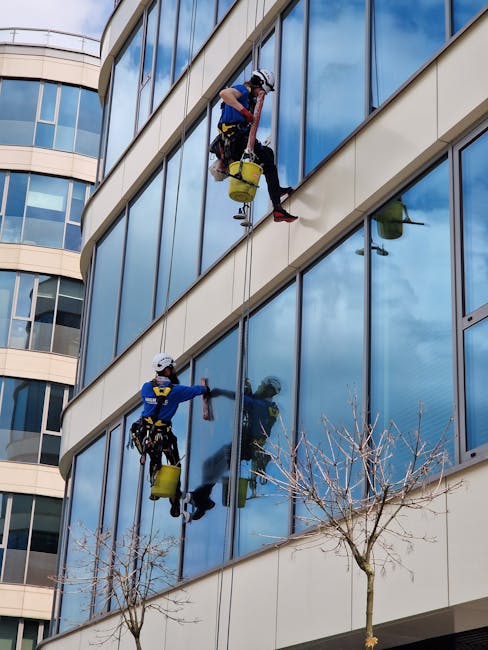
For businesses offering services like facade cleaning or gutter cleaning, the risk profile rises because height access, weather conditions, and specialist equipment enter the picture. The compliance expectation becomes more detailed, and rightly so.
Options, Methods, or Comparison Table
One of the most useful things for a commercial cleaner is understanding the difference between basic business setup, site permission, and specialist permits. They are not the same thing, and mixing them up leads to confusion.
| Type | What it Usually Covers | When You Need It | Typical Risk if Ignored |
|---|---|---|---|
| Business registration | Legal and tax setup for trading | Before or as you start trading | Trading problems, admin issues, missing records |
| Insurance | Protection for public liability, staff, and equipment exposure | Before taking on client work | Claims risk, client rejection, financial loss |
| Site access permission | Building entry, parking, keys, alarms, loading | For commercial premises, blocks, and controlled sites | Delays, missed appointments, access refusal |
| Specialist work controls | Safety measures for chemical, floor, or height-related tasks | For higher-risk cleaning jobs | Accidents, damage, compliance concerns |
| Waste arrangements | Removal and disposal of waste generated by cleaning | Whenever you produce waste on site | Mess, complaints, possible disposal issues |
If you only do light routine work, your setup may be fairly simple. If you handle specialist cleaning such as oven cleaning, soft
Wait, let's not pretend that last one exists - better said: if you handle sofa cleaning or stain removal in client spaces, you still need to think carefully about product selection, drying, and material compatibility. The detail matters.
Case Study or Real-World Example
Picture a small commercial cleaning business in Merton winning its first regular office contract. At first glance, it looks simple: arrive at 6:30 a.m., unlock the suite, vacuum, empty bins, wipe desks, clean the kitchen, and leave before staff arrive. Easy enough. But in practice, the client asks for three things on day one: insurance details, proof of staff training, and confirmation of how waste will be removed.
The cleaner has the skills, but not the paperwork. So the first visit gets delayed while the documents are chased around, the parking situation is clarified, and the building manager explains where contractors are allowed to load in the mornings. Nothing catastrophic. Just slow. A little embarrassing, too.
By week three, the business creates a proper site pack: insurance certificate, contact list, method notes, chemical information, and a first-visit checklist. The next contract goes much more smoothly. The cleaner now has a routine for communal access, a clearer process for office cleaning, and a better sense of how to handle recurring clients.
That is the real value of getting licensing and permits thinking in place early. You are not just avoiding problems. You are creating a business that feels easy to work with.
Practical Checklist
Use this checklist before you take on a new commercial cleaning job in Merton.
- Confirm what type of cleaning the client actually wants.
- Check whether the site has access rules, parking restrictions, or contractor sign-in procedures.
- Make sure your insurance is current and suitable for the job.
- Prepare or update your risk assessment.
- Review cleaning chemicals and safety information.
- Check your equipment is clean, working, and safe to use.
- Plan how waste, dirty water, and packaging will be handled.
- Clarify if the job includes specialist tasks such as floor treatment or stain work.
- Agree who unlocks, locks, and authorises access.
- Keep a copy of client instructions and any permit notes.
- Brief staff or subcontractors before the first visit.
- Save all relevant documents in one place.
If you are growing your cleaning business, it is also worth reviewing your wider customer-facing pages, including pricing and quotes, terms and conditions, and the contact page so your client journey feels joined up. Small thing, big impression.
Conclusion
Commercial Cleaner Licensing & Permits in Merton is really about readiness. Not just "can you clean?" but "can you operate safely, legally, and professionally in a real-world commercial environment?" That is the question clients are asking, even when they do not say it out loud.
If you sort the basics early - business setup, insurance, site permissions, health and safety controls, and a sensible paper trail - everything else becomes easier. Quotes are smoother. Access is simpler. Clients trust you more. And your day-to-day work feels less scrappy, which, let's face it, is worth a lot.
For a cleaning business, that kind of order is not paperwork for paperwork's sake. It is the quiet foundation under everything else.
Get a free quote today and see how much you can save.
Frequently Asked Questions
Do commercial cleaners in Merton need a special licence?
Not always. Many cleaning businesses do not need a single dedicated "cleaner licence", but they may still need business registration, insurance, site permissions, and compliance documents depending on the work they do.
What permits might a commercial cleaner need in practice?
That depends on the job. Common examples include parking permissions, building access approval, waste handling arrangements, and site-specific contractor permissions. Specialist tasks can add more requirements.
Is insurance considered part of licensing and permits?
Not technically, but in real life it often functions that way. Clients usually expect proof of insurance before allowing work to start, especially for commercial premises.
Do I need permission to clean in an office block?
Usually yes, in the sense that the building manager or client needs to authorise access and confirm the rules. Even if no formal council permit is involved, the site will often have its own approval process.
What if I only do one-off cleaning jobs?
You may still need insurance, safe working procedures, and access arrangements. One-off work can actually be trickier because every site is different and there is less routine to rely on.
Does carpet cleaning create extra compliance issues?
It can. Wet work means slip risk, drying time, and equipment safety need attention. If you offer steam carpet cleaning, the same applies, plus a closer look at electrical safety and floor protection.
What documents do clients usually ask for?
Insurance details, basic health and safety information, and sometimes a risk assessment or method statement. Larger clients may ask for more, especially if the work is in a managed or higher-risk site.
Do subcontractors need the same paperwork?
In practice, yes, or close to it. If they work under your business, you need to be confident they meet the same standards and understand the same site rules.
How often should I review my permits and safety documents?
Review them whenever your services change, your client site changes, or your insurance renews. A quick periodic check is usually enough for smaller businesses, but do not leave it gathering dust for years.
What is the biggest mistake new commercial cleaners make?
Assuming a cleaning job is simple enough to skip the admin. It rarely is. The small jobs are often the ones that expose gaps in access, insurance, or safety planning.
Can I still take on Merton commercial work if I mainly do domestic cleaning?
Yes, but commercial work usually expects a more formal setup. If you are branching out from domestic services, consider upgrading your paperwork and procedures before taking on the first client.
Where should I start if I feel overwhelmed?
Start with the basics: define your services, confirm insurance, organise your safety documents, and check what each client site expects. Once those pieces are in place, everything else becomes much more manageable.
If you want to keep building a dependable cleaning business in Merton, the best move is simple: get the foundations right, then let the quality of your work do the talking. That approach never really goes out of style.